
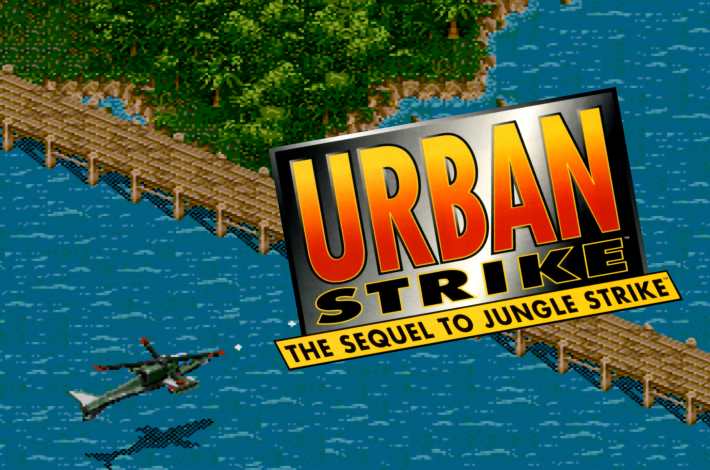
When you think back to the golden era of 16-bit gaming, certain titles stand out not just for their action, but for how ambitious they felt at the time. Urban Strike is one of those games. Released as part of the long-running Strike series, it took the helicopter combat formula and dropped players into more complex, mission-based environments. But does it still hold up today, or is it a relic of its time?
Let’s break it down.
@briangamesdontsuck Urban Strike Super Nintendo Review – #retrogaming ♬ original sound – GamesDontSuck
First Impressions: Big Ideas on a 16-Bit System
Right from the start, Urban Strike feels like it’s trying to do more than your average run-and-gun title. Instead of linear levels, you’re dropped into open-ended maps with multiple objectives. You’re not just blowing things up—you’re rescuing hostages, escorting allies, and managing limited resources.
At the time, this was a big deal. The Super Nintendo Entertainment System wasn’t exactly known for large-scale tactical gameplay, but Urban Strike pushed those boundaries. The game gives you a sense of scale that many other titles of the era simply couldn’t match.
Gameplay: More Than Just Shooting
On the surface, Urban Strike is about flying a military helicopter and destroying enemy targets. But dig a little deeper, and there’s a surprising amount of strategy involved.
Each mission requires you to:
- Manage fuel and ammunition
- Rescue stranded soldiers
- Complete objectives in a specific order
- Avoid heavy enemy fire
This creates a gameplay loop that’s both engaging and tense. You can’t just go in guns blazing—you have to plan your route, prioritise targets, and know when to retreat and refuel.
That said, this depth can be a double-edged sword. New players might find the lack of hand-holding frustrating. The game expects you to figure things out, and if you fail, it’s often back to square one.
Controls: The Biggest Hurdle
Let’s be honest—this is where Urban Strike shows its age.
The helicopter controls can feel clunky, especially by modern standards. Turning, aiming, and positioning yourself precisely can be tricky, particularly in tight urban environments. It’s not unplayable by any means, but there’s definitely a learning curve.
Once you get used to it, though, the controls start to click. There’s a satisfying rhythm to hovering, lining up your shots, and weaving through enemy fire. It just takes a bit of patience to get there.
Difficulty: Brutal but Rewarding
If there’s one thing Urban Strike doesn’t do, it’s go easy on you.
This game is tough. Mistakes are punished heavily, whether it’s running out of fuel mid-mission or taking one too many hits from enemy defences. There’s very little room for error, and progress can feel slow at times.
But here’s the thing—the difficulty is part of what makes the game so rewarding. Completing a mission feels like a genuine accomplishment. You didn’t just get lucky—you planned, adapted, and executed.
For players who enjoy a challenge, this is a huge plus. For others, it might be a dealbreaker.
Graphics and Presentation
Visually, Urban Strike does a solid job within the limitations of the Super Nintendo Entertainment System.
The environments are varied, ranging from dense cityscapes to jungle areas and enemy bases. The isometric perspective gives you a good view of the battlefield, even if it can sometimes make depth perception tricky.
Explosions, animations, and environmental details all add to the experience. It may not be the flashiest game on the system, but it’s functional and immersive.
The sound design also deserves a mention. The music sets a tense, military tone, while sound effects like explosions and gunfire keep the action feeling impactful.
What Still Holds Up Today
Despite its age, there are several aspects of Urban Strike that still feel relevant:
- Strategic gameplay – The need to plan and manage resources adds depth
- Mission variety – Objectives keep things from getting repetitive
- Sense of scale – The open levels feel ambitious even today
In many ways, you can see the DNA of modern tactical and open-ended games in what Urban Strike was trying to do.
What Hasn’t Aged Well
Of course, not everything has stood the test of time:
- Clunky controls – A barrier for new players
- High difficulty – Can feel punishing rather than fair
- Limited guidance – The game doesn’t always explain what to do
These issues don’t ruin the experience, but they do make it harder to recommend to a casual audience.
Final Verdict: Is Urban Strike Worth Playing?
Urban Strike is a fascinating piece of gaming history. It’s ambitious, challenging, and surprisingly deep for a 16-bit title. While the controls and difficulty might put some players off, those willing to invest the time will find a rewarding and unique experience.
For retro enthusiasts, it’s absolutely worth revisiting. For newcomers, it’s more of a “know what you’re getting into” situation.
Score: 7.5/10
It’s not perfect, but it’s far from forgettable—and it proves that even back in the 90s, developers were already experimenting with ideas that would shape the future of gaming.