
Release: 1994 (Sega CD)
Developer: Konami / Hideo Kojima
Genre: Adventure / Visual Novel / Cyberpunk Detective
Introduction – The Sega CD’s Most Ambitious Game
If you grew up in the 90s, you probably remember the Sega CD as that strange, futuristic add-on your friend’s older brother had — the one that promised “next-generation gaming” through CD-ROM technology. Most of its library didn’t live up to the hype.
But then there was Snatcher, a game so ahead of its time it barely seemed real.
Developed by Hideo Kojima and released by Konami in 1994, Snatcher was a full-blown cyberpunk detective adventure that felt like an interactive film. Long before the rise of visual novels, morality systems, or cinematic storytelling, Kojima was already experimenting with them — on the Sega CD, of all places.
It’s stylish, mysterious, and packed with that unique blend of sci-fi paranoia and human drama that would later define Kojima’s career.
For retro gaming fans today, Snatcher is more than a cult classic — it’s a snapshot of gaming evolution, a rare artifact showing what narrative ambition looked like before the medium caught up.
Story – Blade Runner Meets 80s Anime
The year is 2047, and the city of Neo Kobe is a neon nightmare — think Blade Runner with a Japanese twist.
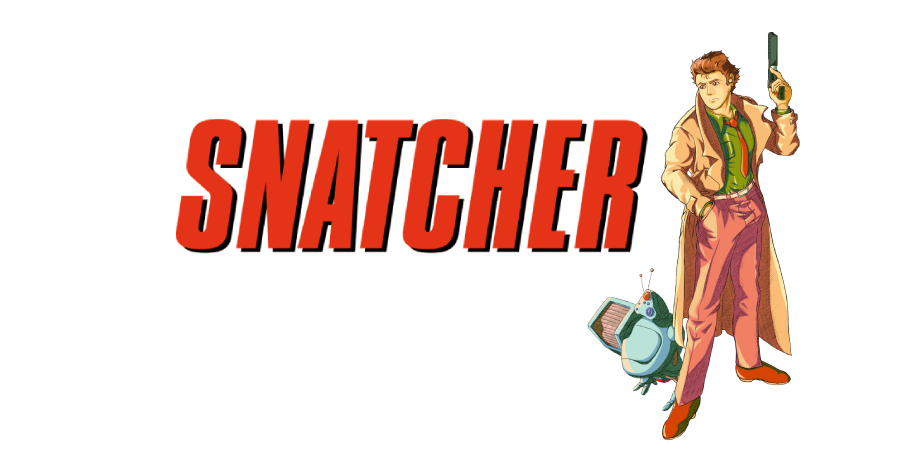
You play as Gillian Seed, a newcomer to the elite police unit known as the Junkers, whose mission is to track down and destroy humanoid robots called Snatchers.
These Snatchers are terrifying: bio-engineered androids who murder humans and assume their identities. No one knows where they come from, or why they’re doing it. The only thing certain is that they’re infiltrating every level of society.
The setup sounds like standard sci-fi fare, but Kojima’s storytelling turns it into something deeper.
As Gillian investigates, fragments of his lost memory resurface. He begins to suspect that his past and the origin of the Snatchers may be intertwined.
Every case you take pulls you deeper into a web of conspiracy, synthetic life, and moral decay. The tone is grim but not humorless — there’s a surprising amount of warmth and wit in the dialogue, especially in Gillian’s banter with his tiny robot partner, Metal Gear Mk. II (yes, that Metal Gear).
It’s the kind of storytelling that makes you forget you’re playing a 16-bit game. Every scene drips with atmosphere — flickering lights, tense music, and cinematic pacing that feels shockingly modern.
Gameplay – Part Detective, Part Visual Novel
At its core, Snatcher is a point-and-click adventure game, but with Kojima’s flair for immersion.
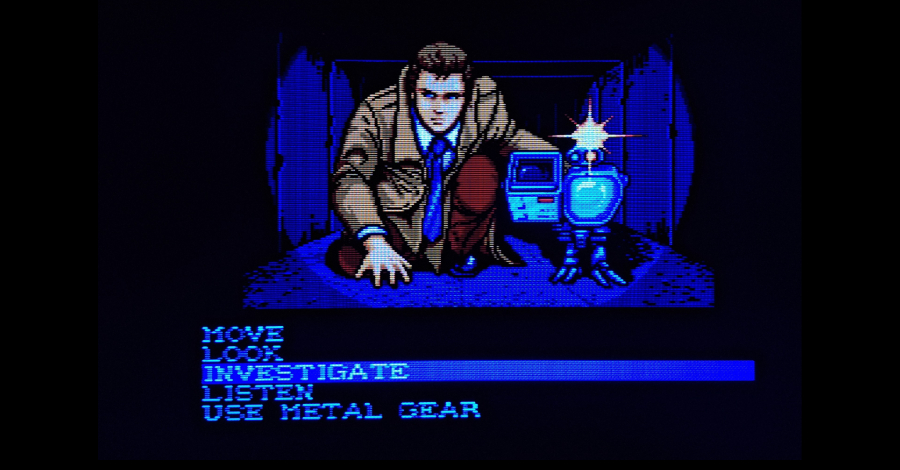
You navigate static environments, question characters, examine objects, and gather clues to solve the mystery.
Instead of an open world, you move between key locations in Neo Kobe — alleys, hospitals, arcades, and laboratories — each rendered in beautiful pixel art. The game rewards curiosity: re-questioning suspects, examining background items, and probing every lead often unlocks hidden dialogue or side lore.
Combat appears occasionally, presented as first-person shooting sequences divided into a 3×3 targeting grid. It’s basic but adds tension at key moments. Sega even released a light gun-compatible version in Japan, though the Western release kept it controller-based.
While some might find the pace slow by modern standards, fans of games like Policenauts, Snatcher’s spiritual successor, or narrative titles like Disco Elysium will feel right at home.
Kojima’s design philosophy is already on display here — he treats the player not as a button masher, but as an active participant in a story.
Presentation – Atmosphere Beyond Its Hardware
For a Sega CD game, Snatcher is nothing short of a technical marvel.
Visuals
The game’s art direction channels the best of 80s and 90s anime — crisp character portraits, moody backgrounds, and an overall tone straight out of Akira and Bubblegum Crisis.
Each environment oozes detail: neon reflections, fog, cluttered cityscapes. It’s one of the most visually cohesive games on the platform.
Audio & Voice Acting
The voice acting is where the Sega CD version truly shines. Nearly every major line of dialogue is fully voiced, which was almost unheard of in 1994.
The English dub, while occasionally cheesy, gives the game personality. The performances of Gillian, Jamie, and Metal Gear are genuinely engaging — they bring depth to what could’ve easily been another text-heavy import.
The soundtrack deserves its own praise. Composed by Konami’s in-house team, it blends moody synths with cinematic tension. Whether you’re exploring dark alleys or confronting a Snatcher in an abandoned factory, the score heightens the mood perfectly.
Put simply: Snatcher is the Sega CD at its absolute best.
Kojima’s Early Genius – Seeds of Metal Gear
It’s impossible to play Snatcher and not see the DNA of Hideo Kojima’s later work.
The attention to small details, the fusion of film and game language, the philosophical undertones about identity, memory, and technology — it’s all here.
For instance, Metal Gear Mk. II, Gillian’s floating robot companion, is a clear precursor to the quirkier side characters that populate later Kojima titles.
There are also clever bits of meta-design — moments where the game subtly breaks the fourth wall or acknowledges itself as fiction, something Kojima would perfect in Metal Gear Solid.
Snatcher may not have the stealth gameplay that made Kojima famous, but it demonstrates his storytelling instincts at full power.
This is a game built by someone obsessed with cinema, science fiction, and the human condition — and he poured all of that into a 16-bit cartridge.
Versions and Rarity – The Holy Grail of Sega CD Collecting
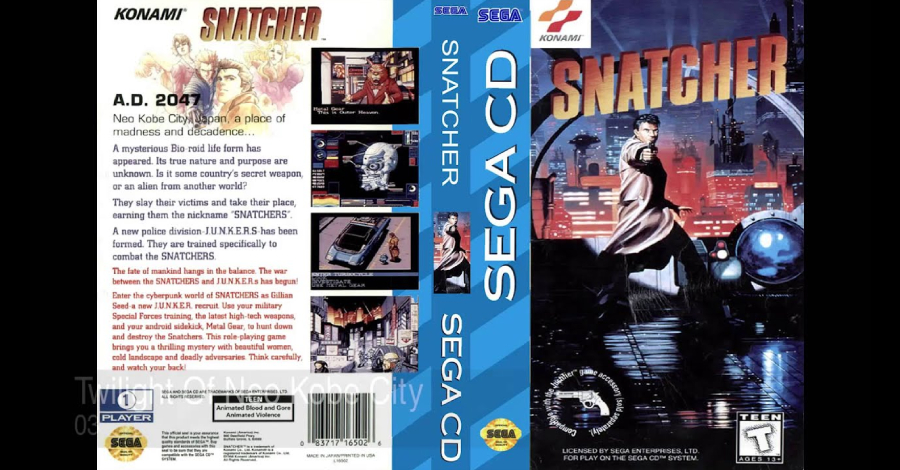
Part of Snatcher’s legendary status comes from its scarcity. The Sega CD version is the only official English localization ever made.
There were Japanese releases for the PC-88, MSX2, PC Engine, and later PlayStation and Saturn — but none of those got English translations.
Because of that, the Sega CD version is highly sought after. Complete copies regularly sell for hundreds of euros on the collector’s market, sometimes over €700 in mint condition.
For preservationists, it’s a reminder of how easily important games can be lost. Thankfully, the community has kept it alive through emulation, fan translations, and retrospectives.
If you’re lucky enough to own an original disc, it’s not just a game — it’s a piece of history.
Themes and Analysis – Humanity in the Machine
Beyond its surface-level detective story, Snatcher explores surprisingly mature themes.
Kojima uses the concept of “Snatchers” as a metaphor for identity theft, corporate power, and human obsolescence — issues that feel even more relevant today.
There’s a haunting sense that technology is advancing faster than morality can handle. The Snatchers are frightening not just because they kill, but because they replace.
It’s a question Kojima keeps asking: What makes us human when machines can mimic us perfectly?
Even the main character, Gillian, is struggling with what it means to be real.
That existential layer gives Snatcher a depth few 16-bit games dared to attempt.
Legacy – The Cult Classic That Inspired a Generation
Although Snatcher wasn’t a commercial success — the Sega CD’s limited install base sealed its fate — its influence is undeniable.
Kojima would revisit the visual novel format with Policenauts and later blend narrative and gameplay more seamlessly in Metal Gear Solid. You can see echoes of Snatcher’s tone and structure in everything from Deus Ex to Cyberpunk 2077.
Fans continue to celebrate Snatcher as one of the most cinematically ambitious games of the 90s.
It’s a constant on “Best Sega CD Games” lists, often mentioned alongside Lunar: Silver Star Story and Sonic CD — but it stands apart for its atmosphere and mature storytelling.
Even today, people who play it for the first time through emulation are blown away by how modern it feels.
Final Verdict – Still the Best Reason to Own a Sega CD
Snatcher isn’t just a relic of 90s gaming; it’s a blueprint for how storytelling in games could — and should — be done.
Yes, it’s slow-paced. Yes, it’s text-heavy. But that’s the beauty of it.
It’s immersive, cinematic, and surprisingly emotional. It’s the kind of game that stays with you long after the credits roll.
For retro gamers, collectors, or anyone fascinated by Kojima’s legacy, Snatcher is essential.
Play it not just as a piece of nostalgia, but as a glimpse into the mind of one of gaming’s greatest storytellers, before the world caught on.
Score: ⭐ 9/10
Pros: Incredible story, memorable characters, rich atmosphere, brilliant audio
Cons: Limited interactivity, slow pacing, rare and expensive
Best For: Fans of cyberpunk, detective stories, and retro narrative games
Buy Snatcher for the Sega CD on eBay
Copies of Snatcher can be quite pricey on eBay, but sometimes you get some good deals. Check out eBay listings below: