
History: The Ape That Made the SNES Roar Again
Donkey Kong Country hit the Super Nintendo in 1994 like a barrel fired through a brick wall. By that point, the Sega Genesis had spent years jabbing Nintendo with attitude, speed, and arcade swagger, while newer hardware was starting to make 16-bit consoles look old. Then Rare walked in with a pre-rendered gorilla, a buddy named Diddy, and enough jungle atmosphere to make every kid on the playground start talking about the SNES again.
Before this game, Donkey Kong was mostly remembered as the arcade brute who threw barrels at Mario. Rare did not just revive him; they rebuilt him. Donkey Kong became the star of a side-scrolling adventure with personality, momentum, secrets, and a visual style that looked almost impossible on the hardware. Nintendo trusted Rare with one of its oldest icons, and the result became one of the defining releases of the generation.
Yes, the keyword people search may be Donkey Cong Country SNes, and the spelling may be a little cursed, but the game behind that search is pure 16-bit royalty. Donkey Kong Country is not just important because it sold a mountain of cartridges. It is important because it reminded everyone that clever art direction, smart level design, and a killer soundtrack could make aging hardware feel brand new.
Gameplay: Fast, Weighty, and Full of Secrets
At its core, Donkey Kong Country is a side-scrolling platformer, but it has a rhythm that separates it from the Mario school of jumping. Donkey feels heavy. When he lands, you feel it. When he rolls into a line of Kritters, there is a satisfying thunk to the movement. Diddy Kong, meanwhile, is quicker and more nimble, making the two-character system more than just a health mechanic. Swapping between them changes how you approach jumps, enemies, and speed runs through familiar stages.
The roll jump is the soul of the game. Once you understand that you can roll off a ledge and jump afterward, the entire jungle opens up. Suddenly, gaps that looked scary become launch ramps. Enemy lines become speed boosts. The game rewards players who trust momentum, and that is why it still feels so good decades later. Donkey Kong Country is simple enough for a beginner to enjoy, but it has that classic Rare layer of hidden mastery underneath.
Level variety is where the game flexes. You run through dense jungle paths, snowy mountain climbs, mine cart tracks, underwater caverns, temples, factories, and gloomy caves. The best stages introduce a gimmick, twist it a few times, then get out before it becomes boring. Mine Cart Carnage remains famous for good reason: it is tense, readable, and absolutely ruthless the first time you play it. The barrel cannon stages are another highlight, turning platforming into timing-based pinball as you launch the Kongs through the sky.
Secrets are everywhere. Bonus rooms hide in walls, under pits, behind bananas, and inside suspicious-looking corners. The game trains you to question everything. Why is there a single banana over that gap? Why does that wall look slightly too convenient? Why is this barrel facing backward? This constant curiosity gives Donkey Kong Country a treasure-hunt vibe that makes replaying stages genuinely fun instead of a chore.
Graphics: The Pre-Rendered Magic Trick Still Has Charm
Let us be honest: when Donkey Kong Country first appeared, it looked unreal. Rare used Silicon Graphics workstations to create 3D models, then converted them into sprites for the SNES. In 1994, this was the kind of visual trickery that made people lean closer to the television. Characters looked rounded and shaded. Backgrounds had depth. The jungle felt damp, alive, and moody in a way most 16-bit platformers did not.
Does every visual element age perfectly? Not quite. Some sprites have that rubbery pre-rendered look that screams mid-90s tech demo, and a few backgrounds can look busy compared with cleaner pixel art classics. But the overall presentation still works because Rare knew how to build atmosphere. Jungle Hijinxs has golden sunlight, thick leaves, and a warm sense of adventure. The snow stages feel cold and lonely. The industrial zones are grimy, metallic, and oppressive.
The animation deserves praise too. Donkey Kong beating his chest, Diddy flipping his cap, enemies wobbling through patrols, and animal buddies charging across the screen all give the game a cartoon energy. Rambi the rhino feels powerful. Enguarde slices through water with smooth confidence. Squawks, Expresso, and Winky all add personality even when their stages can be nerve-wracking. The game looks like a strange fusion of arcade mascot platforming and early CGI experimentation, and that unique identity is still part of its appeal.
Sound: David Wise Turns the Jungle Into a Mood
The soundtrack is not just good. It is one of the best reasons to play Donkey Kong Country today. David Wise gave the SNES a score that goes way beyond catchy platformer tunes. The music has texture. It breathes. It knows when to be funky, when to be mysterious, and when to make you feel completely alone in a flooded cave.
Aquatic Ambience is the obvious masterpiece, and it deserves every bit of praise it gets. It is calm, haunting, and weirdly emotional for a track that plays while a cartoon ape collects bananas underwater. Stickerbush Symphony from the sequel may get a lot of the spotlight in the broader series, but the first game already proved that Wise was composing on another level. Fear Factory adds mechanical dread, Mining Melancholy-style moods begin to take shape here, and the jungle themes bring instant energy.
The sound effects are equally memorable. The banana collection pop, the clap of a successful enemy stomp, the slap of a barrel breaking, and the goofy cries of the Kongs all stick in your brain. Cranky Kong’s cabin music alone can transport a longtime SNES player back to a carpeted living room, a chunky controller, and the glow of a CRT. That is not nostalgia doing all the work either; the audio design is genuinely sharp.
Difficulty: Fair, Spiky, and Sometimes Brutal
Donkey Kong Country is not the hardest SNES platformer, but it has teeth. The early jungle stages are friendly enough, teaching movement, barrels, animal buddies, and secrets at a comfortable pace. Then the game starts testing your patience. Mine carts demand memorization and quick reactions. Snow levels obscure platforms with weather effects. Later factory stages punish sloppy jumps and force you to understand enemy patterns.
The save system is one of the biggest sources of old-school tension. Candy Kong’s save points are placed on the world map, not after every stage, so losing lives can mean replaying a chunk of the game. Modern players used to instant checkpoints may find that harsh. Back then, it made every difficult level feel like an event. You did not just clear a stage; you survived it.
That said, the difficulty usually feels earned. Most deaths come from misjudging momentum, panicking during a barrel sequence, or failing to read a pattern. There are a few cheap-feeling moments, especially when enemies appear at the edge of the screen or when jumps require faith before knowledge. Still, the controls are responsive enough that you keep coming back. The best frustrating games make you say one more try, and Donkey Kong Country absolutely has that magic.
What Holds Up and What Feels Dated
What holds up best is the feel. Rolling through enemies, bouncing across tires, blasting from barrel cannons, and hunting bonus rooms remains satisfying. The pacing is tight, the worlds are memorable, and the soundtrack gives every area a strong identity. As a cartridge you can revisit for a weekend, it is fantastic.
The dated parts are mostly structural. Some bonus rooms are too obscure. The save placement can be annoying if you are not using modern conveniences. Bosses are also weaker than the stages leading to them. Many are simple pattern fights against oversized versions of normal enemies, and compared with the creativity of the levels, they feel a little undercooked.
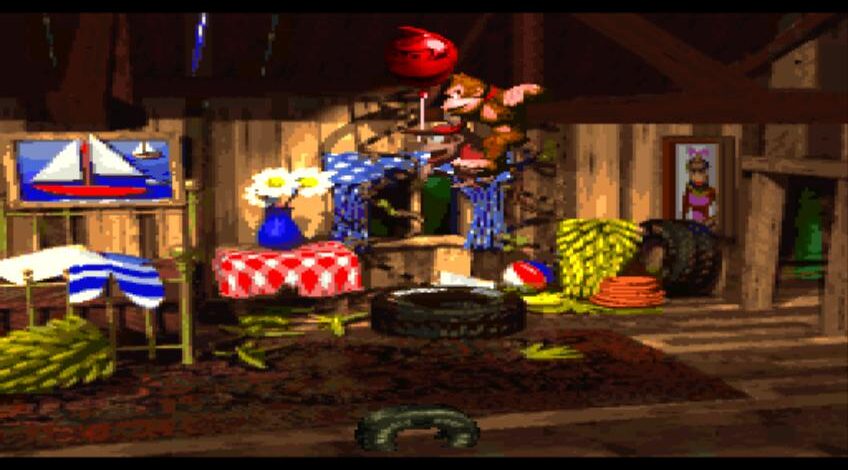
Even with those flaws, the game has character in every corner. Cranky Kong roasting modern games, Funky Kong flying you around the map, Candy saving your progress, and the Kongs celebrating after boss fights all make the world feel bigger than a simple stage select screen. Rare understood that personality matters.
Final Verdict: A Must-Play SNES Platformer
Donkey Kong Country is not perfect, but it is absolutely essential. It is a landmark SNES game, a technical showpiece, a killer platformer, and the beginning of one of Rare’s greatest runs. The graphics may no longer shock players the way they did in 1994, but the atmosphere, music, movement, and secret-packed level design still hit hard.
If you love 16-bit platformers, you need to play it. If you grew up with it, returning to it feels like hearing an old jungle drumbeat calling you back. If you are discovering it because you typed Donkey Cong Country SNes into a search bar, congratulations: you have found one of the Super Nintendo’s crown jewels, even if the spelling took a wrong turn at the banana hoard.
Donkey Kong Country earns its legendary status. It is energetic, moody, occasionally mean, and constantly fun. The best SNES games have a way of making time disappear, and this one still does that. One minute you are starting a fresh file, and the next you are deep in the mines, low on lives, palms sweaty, muttering that this time you are definitely clearing the cart level. That is classic gaming at its finest.
Buy Donkey Cong Country SNes on eBay
Looking for a copy of Donkey Cong Country SNes?
View current eBay listings