
There are games you remember, and then there are games that rearrange your brain a little. final fantasy 7 ps1 is one of those. Even decades later, with remakes, remasters, spin-offs, and enough Cloud Strife merchandise to fill a Midgar warehouse, the original PlayStation release still has a strange electric pull. It is blocky, dramatic, occasionally awkward, wildly ambitious, and absolutely unforgettable.
This is not just nostalgia talking. Final Fantasy VII on PS1 is a game with rough edges, yes, but also with a sense of momentum and imagination that many modern RPGs still chase. It threw console role-playing games into the mainstream spotlight, made turn-based battles feel cinematic, and turned a moody guy with a giant sword into one of gaming’s most recognizable heroes. The question is not whether it mattered in 1997. It did. The question is whether it is still worth playing now. Spoiler: yes, but let’s dig into why.
History: The RPG That Changed the PlayStation Forever
When Final Fantasy VII launched in 1997, it felt massive in every sense. Square moved the series from Nintendo hardware to Sony’s PlayStation, a decision that sent shockwaves through the industry. The switch to CD-ROM allowed for pre-rendered backgrounds, full-motion video cutscenes, and a scale that would have been difficult on cartridges. For players at the time, opening that multi-disc case felt like holding the future.
The game arrived at a perfect moment. The PlayStation was exploding, 3D gaming was still fresh and exciting, and many Western players were just beginning to discover Japanese RPGs. final fantasy 7 ps1 became the gateway drug. It introduced millions to limit breaks, materia, airships, melodramatic villains, and the idea that a video game story could genuinely crush you.
Its cyberpunk-meets-fantasy setting was a huge departure from the more medieval tone of earlier entries. Midgar, with its reactors, slums, Shinra corporate oppression, and neon misery, immediately set a darker mood. Then the game expands, and suddenly you realize Midgar was just the opening act. That sense of scale remains one of its greatest tricks.
Story and World: Messy, Bold, and Impossible to Forget
Final Fantasy VII starts with eco-terrorism, corporate greed, and a spiky-haired mercenary named Cloud working with AVALANCHE to sabotage a Mako reactor. From there, it spirals into identity crises, ancient civilizations, planetary life energy, weapons of mass destruction, and one of gaming’s most iconic villains: Sephiroth.
The story is not always clean. The original localization has some famously strange lines, and certain plot beats can feel abrupt. But the emotional core lands. Cloud is not just a cool sword guy. He is damaged, confused, and unreliable in ways that become more interesting as the game unfolds. Tifa carries quiet emotional weight. Barret is loud, angry, funny, and deeply human. Aerith brings warmth and mystery without feeling like a simple plot device, even though the plot asks a lot from her.
What still impresses me is how much personality the world has. Wall Market is bizarre and funny. Cosmo Canyon feels spiritual and calm. Nibelheim is creepy in a way that sticks under your skin. The Gold Saucer is ridiculous, colorful, and oddly melancholy when you consider where the story goes. This is a game that constantly changes flavor without losing its identity.
Gameplay: Materia Makes the Magic Happen
At its core, final fantasy 7 ps1 uses the Active Time Battle system, meaning characters and enemies act when their time gauges fill. It is turn-based with pressure, and it still feels snappy. Battles are frequent, but they usually move quickly enough that grinding does not become a total chore unless you are chasing optional superbosses or late-game mastery.
The real star is the materia system. Instead of locking characters into rigid classes, the game lets you equip magical orbs called materia into weapons and armor. Magic materia gives spells, command materia adds abilities, summon materia calls in screen-filling monsters, and support materia modifies other materia when linked in connected slots. It is elegant, flexible, and dangerously addictive.
Want Cloud to be a lightning-slinging bruiser? Go for it. Want Barret to heal the party from the back row while firing a gun-arm? Sure. Want to pair All with Restore and become the team’s emergency medic? You will, and you will feel smart doing it. The system encourages tinkering without burying you in menus so deep you need a spreadsheet.
Limit breaks also add personality to combat. Taking damage fills a character’s limit gauge, allowing them to unleash unique special attacks. Cloud’s Braver, Tifa’s slot-based combos, Aerith’s healing limits, and Cid’s explosive moves all make party members feel distinct even when materia makes them mechanically flexible.
Exploration, Side Content, and Pacing
One reason Final Fantasy VII remains so replayable is that it constantly feeds you something new. The early Midgar section is tight and linear, almost like a cinematic action RPG before the world map opens. Once you leave the city, the game breathes. You visit towns, cross mountains, ride vehicles, chase rumors, breed chocobos, hunt optional summons, and eventually pilot an airship.
The pacing is not flawless. Some mini-games are charming; others are clunky enough to make you stare at the controller like it betrayed you. The snowboarding, submarine sequence, and parade bits are memorable, but not always for the right reasons. Still, the sheer variety gives the adventure texture. Final Fantasy VII is rarely boring because it is always willing to throw some weird new mechanic at you.
Side content is where dedicated players can lose hours. Chocobo breeding alone becomes its own strange obsession, especially if you want the Knights of the Round summon. Optional bosses like Ruby Weapon and Emerald Weapon are brutal flex fights that test your understanding of materia combinations. The game rewards curiosity, and that is one of the best traits an RPG can have.
Graphics: Dated, Strange, and Still Beautiful
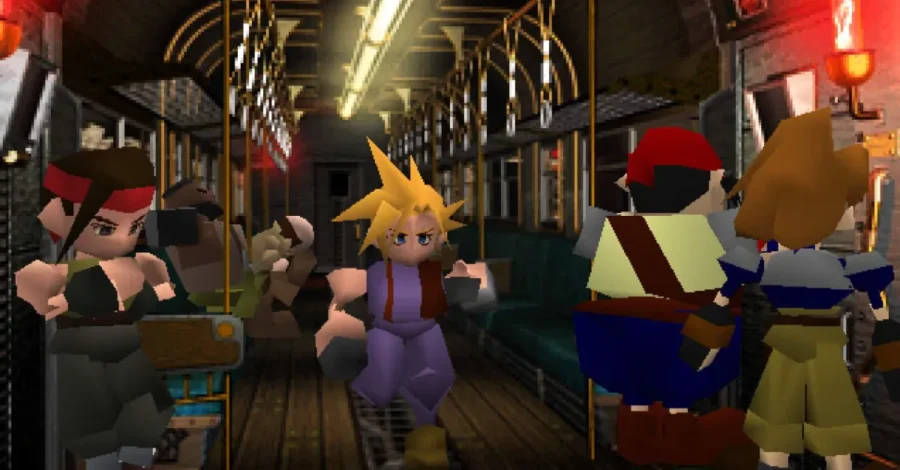
Let’s be honest: the character models in the field look like chunky little action figures with oven mitt hands. If you are coming straight from modern RPGs, the first hour may be visually jarring. But once your eyes adjust, the art direction does a lot of heavy lifting.
The pre-rendered backgrounds are often gorgeous. Midgar’s industrial grime, Shinra Headquarters’ sterile menace, the haunting interiors of forgotten towns, and the surreal final areas all have a painterly atmosphere that pure polygonal environments of the era often lacked. The battle models are more detailed than the field models, and the summon animations were mind-blowing at the time.
The FMV sequences deserve special mention. Sure, they are low-resolution by today’s standards, but they are staged with confidence. The opening bombing run, the reveal of Midgar, the escape sequences, and the late-game spectacle still carry dramatic power. The original final fantasy 7 ps1 visuals are dated technically, but artistically they remain loaded with mood.
Sound: Nobuo Uematsu Goes Nuclear
The soundtrack is one of the big reasons this game refuses to fade away. Nobuo Uematsu delivered an all-timer here. The bombing mission theme pumps adrenaline into the opening minutes. Tifa’s Theme is tender without being sugary. Cosmo Canyon sounds ancient and warm. Aerith’s Theme is, well, capable of emotionally destroying an entire generation.
Then there is One-Winged Angel, the track that turned a final boss fight into a gothic rock opera nightmare. Even with PS1-era sound limitations, the music has incredible identity. These melodies do not just accompany the journey; they define it.
Sound effects are also satisfying in that crunchy old-school way. Menu clicks, sword slashes, spell impacts, victory fanfares, and limit break noises all burrow into your memory. There is no voice acting, which may actually help the game today. You read the characters in your own rhythm, and the soundtrack does the emotional heavy lifting.
Difficulty: Approachable, With Teeth If You Go Looking
Final Fantasy VII is not the hardest RPG on the PlayStation, and that accessibility helped it become a phenomenon. Regular story battles are manageable if you keep your gear updated, use healing materia wisely, and do not run from every fight. Bosses can surprise you, but most are fair once you learn their patterns and elemental weaknesses.
The difficulty curve does wobble in places. Some enemies hit unusually hard, and a few bosses can punish sloppy materia setups. New players might struggle if they ignore status effects, back-row positioning, or linked materia. Still, the game is generous with save points and gives you plenty of tools.
Where it gets nasty is optional content. Ruby Weapon and Emerald Weapon are not casual encounters; they are late-game exams written by someone who enjoys watching players suffer. Beating them requires preparation, clever materia builds, and sometimes a willingness to exploit the system like a mad scientist. That balance works beautifully: the main quest welcomes newcomers, while the postgame gives veterans something to chew on.
Final Verdict: Still Essential, Still Weird, Still Powerful
final fantasy 7 ps1 is not perfect. The translation is uneven, the mini-games vary wildly, and the blocky character models can look goofy during supposedly serious moments. But perfection is not why this game matters. It matters because it swings for the fences constantly. It wants to be a sci-fi epic, a character drama, an environmental warning, a mystery, a comedy, and a mythic fantasy all at once. Somehow, through sheer confidence and heart, it pulls most of it off.
Playing it today requires a little patience, especially if you have only experienced modern RPGs. But once the materia system clicks, once the music settles in, once the world opens up and the story starts twisting, it becomes obvious why people still talk about this game with fire in their eyes. This is a landmark RPG that earned its reputation.
If you care about PlayStation history, JRPGs, or games that shaped the medium, Final Fantasy VII belongs on your list. The PS1 original remains the rawest and most fascinating version: imperfect, atmospheric, and packed with moments that still hit like a Limit Break.
Score: 9.5/10
Buy final fantasy 7 ps1 on eBay
Looking for a copy of final fantasy 7 ps1?
View current eBay listings