
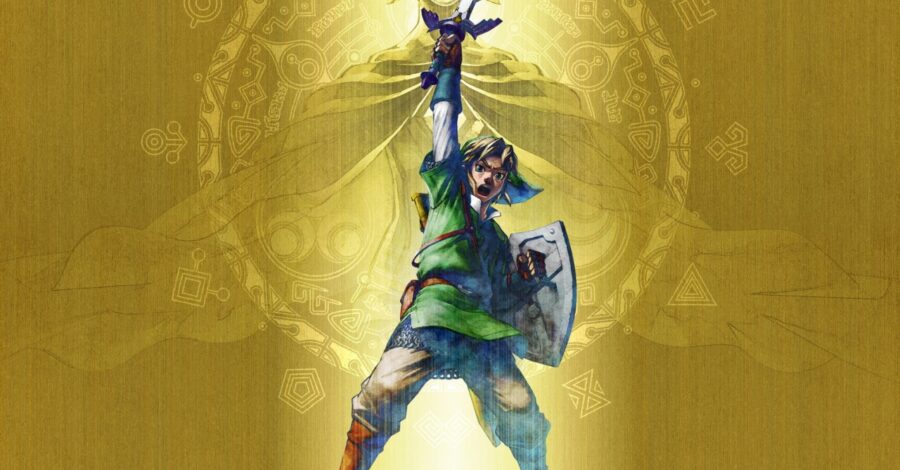
Some games are important because they were first. Others survive because they are still fun when the museum glass comes off. The legend of zelda nes is both: a landmark release that helped define console adventure games, and a surprisingly mean, mysterious, addictive quest that can still swallow an entire evening if you let it. It is rough in places, absolutely. It is cryptic, occasionally stubborn, and not remotely interested in holding your hand. But that is also why it still has teeth.
Playing it today feels less like revisiting a dusty classic and more like stepping into a wilderness where every screen might be hiding a secret, a trap, or a fairy fountain you desperately need. This is not the polished, cinematic Zelda many players know from later Nintendo consoles. This is raw Hyrule: dangerous, quiet, and wonderfully strange.
History: When Hyrule Opened Its Gates
Released in Japan in 1986 for the Famicom Disk System and later brought to the NES, The Legend of Zelda arrived at a time when many console games were still built around high scores, linear stages, and quick bursts of arcade-style play. Nintendo, with Shigeru Miyamoto and Takashi Tezuka leading the charge, delivered something different: a sprawling action-adventure with exploration, inventory progression, save files, and a world that felt bigger than the cartridge should have allowed.
The gold NES cartridge became iconic for a reason. It looked like treasure because, in a very real sense, it was. This was a game you did not simply beat in one sitting and forget. You mapped it, argued about it with friends, called hotlines, traded rumors at school, and bombed suspicious walls because someone swore there was a hidden cave there. In an era before online walkthroughs, the legend of zelda nes created a community around mystery.
Its influence is impossible to overstate. Open-world design, item-gated progression, secret hunting, permanent upgrades, and the joy of wandering into trouble all have roots here. Plenty of games have improved on its ideas, including Zelda’s own sequels, but few have matched the pure thrill of being dropped into a world and told, essentially, good luck.
Gameplay: Exploration Before Hand-Holding
The setup is beautifully simple. You are Link, a small green hero with a sword, a shield, and a terrifying lack of instructions. Your goal is to recover the pieces of the Triforce of Wisdom, defeat Ganon, and rescue Princess Zelda. To do that, you explore an overworld packed with enemies, caves, shops, secrets, and entrances to nine dungeons.
The Overworld Still Has That Magic
Hyrule is arranged as a grid of single-screen areas, each one snapping into view as you move north, south, east, or west. By modern standards, that sounds limited. In practice, it gives the world a board-game-like rhythm that is incredibly satisfying. Every screen becomes a little puzzle: where can I go, what can I kill, what looks suspicious, and how fast can I escape before a Lynel ruins my afternoon?
The best part is how much the game trusts the player. There are no glowing arrows, no quest journal, no friendly NPC repeating the objective every ten minutes. You are expected to experiment. Burn bushes with the candle. Push blocks. Bomb cracked-looking walls, and then bomb walls that do not look cracked at all. Buy bait. Test the raft. Try that weird staircase. The game is constantly whispering that the world is hiding something, and most of the time, it is right.
Dungeons Are Compact but Memorable
The dungeons are where the structure tightens. Each labyrinth has locked doors, keys, traps, bosses, maps, compasses, and a key item that usually expands what you can do. The boomerang, bow, ladder, raft, recorder, and magical rod all change the way you think about Hyrule. That item-based progression is now standard adventure-game language, but here it feels clean and immediate.
Combat is basic, yet tense. Link attacks in four directions, and when at full health, his sword fires a beam. Lose even half a heart and that luxury is gone, which makes staying healthy feel genuinely valuable. Enemies are not just decorations. Darknuts deflect frontal attacks. Like Likes eat your shield. Wizzrobes zip around like caffeinated nightmares. Even common foes can pinball you into disaster if you get careless.
The interface is clunky by modern standards, especially when switching items through the subscreen, but the core loop is still excellent: explore, fight, discover, upgrade, survive, repeat. It is old-school design with almost no padding.
Graphics: Tiny Sprites, Huge Imagination
Visually, The Legend of Zelda is not the prettiest NES game, but it is one of the most readable and evocative. The tiles are simple: green fields, brown mountains, blue water, gray dungeon walls. Yet the game uses these pieces to build a world that feels coherent. You know when you are in a forest, graveyard, desert, coastline, or mountain pass, even when the art is doing more with suggestion than detail.
Link himself is instantly recognizable, a tiny hero with a shield that takes up half his body. Enemy designs are colorful and expressive enough to be memorable despite their size. Octoroks spit rocks with annoying confidence. Moblins look like trouble. Gleeok, Dodongo, and Aquamentus give the boss rooms personality, even if some fights are mechanically simpler than their designs imply.
The graphics work because they leave space for imagination. Modern games show you everything. The legend of zelda nes gives you just enough and lets your brain do the rest. That is part of its charm, and also part of why Hyrule still feels a little haunted.
Sound: Simple Tunes That Became Mythology
Koji Kondo’s music is legendary for a reason. The overworld theme is not just catchy; it is heroic, restless, and perfectly suited to wandering into danger. It loops constantly, but it rarely becomes annoying because it feels like forward motion. You hear it and instantly want to move.
The dungeon music is much darker, all tension and echo. It makes each maze feel hostile, like the walls are watching. The sound effects are equally effective: the sword slash, the low-health warning, the secret chime, the item pickup fanfare. That little discovery jingle still hits like a shot of pure dopamine.
Yes, the audio palette is limited. Yes, the low-health beep can drill into your skull after a while. But the sound design is so tied to reward, danger, and discovery that it becomes part of the game’s nervous system. You do not just hear Zelda. You react to it.
Difficulty: Brutal, Fair, and Sometimes Cruel
Let us be honest: this game can be rude. The legend of zelda nes does not care if you are comfortable. It hides major secrets behind unmarked walls and random bushes. It allows you to wander into areas where enemies can demolish you. It gives cryptic hints like they were translated from an ancient goblin receipt. If you go in blind, you will get lost. You will waste bombs. You will die in rooms full of Blue Darknuts and wonder if anyone at Nintendo had mercy in their heart.
But the difficulty is also a huge part of the appeal. This is a game about knowledge as much as reflexes. Every death teaches you something. Every discovered shortcut or heart container makes the world feel more manageable. Once you understand where to find better gear, where to farm rupees, and which dungeons to tackle in a sensible order, the adventure opens up beautifully.
That said, some design choices have aged more harshly than others. Bombing random walls is not great puzzle design. Money-making can feel grindy. Certain late-game rooms are less tactical challenge and more enemy chaos in a box. The second quest, unlocked after finishing the game or entering a certain name, is even more punishing and obscure. It is brilliant for veterans, but newcomers may want a notebook, a map, and a deep breath.
The key difference is that the game rarely feels boring. Frustrating, yes. Mysterious, definitely. Occasionally unfair? I would argue yes. But never dull. Its danger gives its discoveries weight.
Final Verdict: A Rough-Edged Masterpiece
The Legend of Zelda on NES is not perfect, and pretending otherwise does the game a disservice. Its secrets can be too opaque, its combat can be stiff, and its lack of guidance may bounce off players raised on modern convenience. But those rough edges are wrapped around one of the most important and enduring adventure games ever made.
What still impresses me is its confidence. It does not beg for your attention. It drops you into Hyrule, hands you a sword, and lets curiosity do the rest. That sense of freedom remains powerful. The joy of finding a hidden cave, earning a new item, surviving a nasty dungeon, or finally piecing together the route to the next Triforce fragment still works because the game respects your persistence.
If you love retro games, the legend of zelda nes is essential. If you love modern Zelda, it is fascinating to see the series’ DNA in such a pure form. And if you are new to 8-bit adventures, be warned: this is not a cozy history lesson. It is a real quest, one that bites back. But when it clicks, it is magic.
Score: 9 out of 10. Old, stubborn, and still absolutely alive.
Buy the legend of zelda nes on eBay
Looking for a copy of the legend of zelda nes?
View current eBay listings