
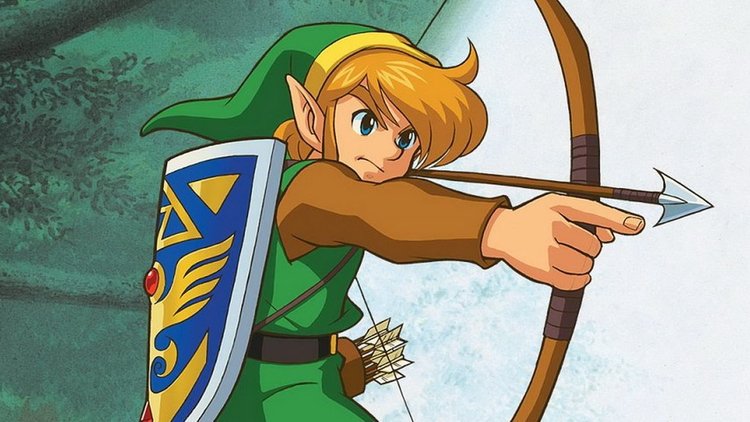
Some games are classics because people keep saying they are. Others are classics because you sit down with them decades later and they still grab you by the collar within five minutes. The legend of zelda a link to the past snes belongs firmly in that second camp. This is not just an important Super Nintendo game, or an important Zelda game, or a nostalgic cartridge with a pretty gold label. It is one of those rare adventures that still feels alive, clever, mysterious, and beautifully paced every time you return to it.
Released in an era when console games were rapidly learning how big they could be, A Link to the Past took the foundations of the original NES Zelda and rebuilt them with confidence. It has overworld exploration, dungeons, secrets, memorable items, boss fights, and that irresistible feeling that every odd-looking rock or cracked wall is hiding something. Even now, it is ridiculously easy to lose an afternoon to Hyrule.
History: Zelda Finds Its True Shape on SNES
After Zelda II experimented with side-scrolling action and RPG mechanics, Nintendo returned to a top-down perspective for the Super Nintendo. That decision could have felt like retreating to familiar ground, but A Link to the Past is anything but safe. It is the moment where the series formula snapped into place: an open world full of secrets, themed dungeons built around key items, a growing arsenal of tools, and a story that gives the journey stakes without drowning the player in text.
Originally released in Japan in 1991 and in North America in 1992, the game arrived early enough in the SNES lifespan to help define what the system could do. The leap from the NES was huge. Hyrule felt greener, grander, moodier, and more coherent. The game also introduced concepts that would echo throughout the franchise, including the Master Sword as a legendary weapon, parallel worlds, and a richer version of the struggle between Link, Zelda, and Ganon.
Gameplay: Pure Adventure Design, No Filler
The heart of The legend of zelda a link to the past snes is its rhythm. You explore, you get curious, you find a dungeon, you earn a new item, and suddenly the world changes. That design loop is still one of the most satisfying in gaming. The bow, hookshot, bombs, Pegasus Boots, magic mirror, hammer, flippers, and countless other tools are not just inventory clutter. They are keys to new ideas. Every item invites you to mentally revisit places you have already seen.
Combat is simple but snappy. Link swings his sword in clean arcs, blocks with his shield, fires arrows, tosses bombs, and eventually unleashes stronger magic and weapons. It is not complicated in the modern action-game sense, but it is precise. Enemies are placed to harass, trap, surprise, or test your timing. A room full of bouncing anti-fairies, conveyor belts, spikes, and narrow paths can still make your palms sweat.
The dungeons are where the game becomes legendary. Each one has a strong identity without needing excessive gimmicks. The Eastern Palace teaches you how the game thinks. The Desert Palace opens up the idea that dungeons can spill into the overworld. The Tower of Hera plays with verticality. Later Dark World dungeons get trickier, meaner, and more intricate, especially when switches, hidden floors, and multi-room puzzles start layering together.
What makes it work is fairness. The game rarely screams the answer, but it usually gives you enough information to reason things out. If you are stuck, the solution is often to inspect the room, try a new item, push suspicious blocks, light torches, or think about what changed after getting the dungeon treasure. That is great adventure design. It respects the player.
Light World, Dark World, and the Joy of Secrets
The dual-world structure is still brilliant. The Light World is heroic and inviting, while the Dark World twists familiar locations into something dangerous and corrupted. The magic mirror lets you move between them, and the best secrets often come from understanding how geography overlaps. A ledge in one world might become a hidden entrance in the other. A blocked route in the Dark World might be solved by approaching it from the Light World.
This gives Hyrule texture. You are not just walking across a map; you are learning it. Caves, fairy fountains, heart pieces, rupee rooms, optional upgrades, and strange little NPCs make the world feel packed without becoming messy. Modern open-world games often confuse size with wonder. A Link to the Past understands that wonder comes from density, mystery, and reward.
Graphics: Pixel Art That Still Has Magic
Visually, A Link to the Past is peak early SNES craftsmanship. The sprites are clean, expressive, and readable. Link himself is tiny, but every animation communicates purpose, from his sword swing to his item use to the way he tumbles into pits. Environments use color beautifully: the calm greens of Hyrule Field, the golden haze of the desert, the icy blues of certain caves, and the oppressive palette of the Dark World.
What stands out today is clarity. You always know what is solid, what is dangerous, what can be lifted, what might be bombed, and where you can move. The art is charming, but it is also functional. That is why the game has aged so well. It does not need high resolution to be atmospheric. The rainy opening, with Link sneaking toward Hyrule Castle at night, remains one of the most iconic mood-setters in 16-bit gaming.
Sound: A Soundtrack Burned Into Gaming Memory
Koji Kondo’s soundtrack is absolutely essential to the experience. The overworld theme is bold, adventurous, and instantly recognizable. The Dark World theme is arguably even better, adding urgency and danger without losing that heroic pulse. Dungeon music creates tension through repetition and atmosphere, making every basement and locked room feel a little hostile.
The sound effects are just as memorable. The secret chime is pure dopamine. The low-health beep may be infamous, but it definitely gets the job done. Sword slashes, bomb blasts, door unlocks, item fanfares, and rupee pickups all have that Nintendo precision. The audio constantly rewards you, warns you, and pulls you deeper into the adventure.
Difficulty: Challenging Without Being Cruel
A Link to the Past is not a pushover. Early on, it feels approachable, but the Dark World ramps things up. Enemies hit harder, dungeon layouts become more complex, and bosses demand better use of your equipment. Players who rush in carelessly will burn through hearts quickly, especially before collecting bottles, fairies, and heart containers.
That said, the difficulty is one of the game’s strengths. It pushes you to explore and prepare. Finding heart pieces matters. Upgrading gear matters. Learning enemy patterns matters. There are a few moments that can feel cryptic, especially for players used to modern objective markers, but the game’s world is compact enough that experimentation rarely feels like punishment. When you finally crack a puzzle or beat a tough boss with half a heart left, it feels earned.
Final Verdict: Still One of the Best Adventures Ever Made
The legend of zelda a link to the past snes is the kind of game that reminds you why people fell in love with action-adventure games in the first place. It is elegant, exciting, mysterious, and unbelievably well paced. It does not waste your time with bloated systems or endless tutorials. It hands you a sword, points you toward danger, and trusts you to become the hero through curiosity and persistence.
Is it perfect? Almost. Some item swapping can feel clunky by modern standards, and a handful of secrets are obscure enough to send new players hunting for help. But those are tiny complaints against a game this strong. The dungeons are fantastic, the overworld is unforgettable, the music is legendary, and the Light World/Dark World concept remains one of the greatest structural ideas in the series.
If you own a SNES, this is mandatory. If you love Zelda, this is sacred ground. If you are exploring retro games and want to understand why the 16-bit era still has such a fierce hold on players, start here. A Link to the Past is not just old-school. It is timeless.
Buy The legend of zelda a link to the past snes on eBay
Looking for a copy of The legend of zelda a link to the past snes?
View current eBay listings